Hoppa till innehål

Copper-based Alloys Databases

TCCU7 is our thermodynamic and properties database designed for use with copper-based alloys. MOBCU6 is the corresponding mobility database needed for use with the add-on kinetic modules.

Technical Information Sheet for TCCU7
Technical Information Sheet for MOBCU6

Validation and Calculation Examples for TCCU7

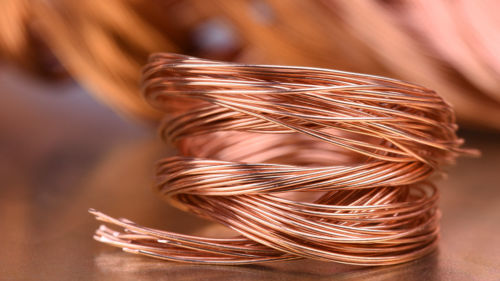
Scrap copper wire for recycling

TCCU7 Quick Overview

  • PROPERTIES:
    • Gibbs Energy
      • Volume
        • Surface tension of liquid
          • Viscosity of liquid
            • Electrical resistivity
              • Thermal conductivity
              • ELEMENTS: Ag, Al, Au, As, B, Be, Bi, C, Ca, Cd, Ce, Co, Cr, Cu, Fe, Ge, La, Mg, Mn, Mo, Nb, Ni, O, P, Pb, Pt, S, Se, Si, Sn, Ta, Ti, Zn, Zr
              • ASSESSED PHASES: 368

TCCU7 for Thermodynamic and Properties Data

TCCU7 is a thermodynamic and properties database for copper-based alloys. It includes nearly all stable phases in the assessed systems that may form in as-cast and aged Cu-based alloys.

TCCU7 was developed to be used with our entire suite of products: Thermo-Calc, the Add-on Modules, and all available SDKs.

MOBCU6 for Kinetic Data

MOBCU6 is a corresponding mobility database that provides kinetic data for those working with the add-on kinetic modules – the Diffusion Module (DICTRA) and the Precipitation Module (TC-PRISMA) – as well as a few specific calculation types, such as Scheil with back diffusion. If you do not purchase a license for an add-on kinetic module, you most likely do not need a mobility database. One of our technical sales representatives can help you determine whether your work requires a mobility database.

MOBCU6 is compatible and recommended to be used in combination with TCCU7.

Publications on the Development of TCCU and MOBCU

The following publications discuss the development of the TCCU and MOBCU databases. The first one is Open Access and the second is made available through a generous agreement with J-STAGE.

Ying Tang, Qing Chen, Anders Engström
Kinetic Simulations of Diffusion-Controlled Phase Transformations in Copper-based Alloys
Diffusion Foundations, Volume 15 (2018), pp. 1-22
Read the paper

Qing Chen, Ying Tang, Anders Engström
Developing Thermodynamic and Kinetic Databases for Cu-Based Alloy Design
Journal of Japan Institute of Copper, Volume 59 (2020) Issue 1, pp. 7-12
Read the paper

Highlights of the Latest Releases

TCCU7

The new version of our Copper-based Alloys Databases, TCCU7, was released with Thermo-Calc 2026b. Read the Release Notes for more details.

  • 2 new elements: S and Ta (34 total)
  • 53 new phases (368 total)
  • 26 new binary systems assessed (175 total)
  • 15 new ternary systems assessed (79 total)
  • Several binary and ternary systems updated
  • Adds molar volume, surface tension, and viscosity for new elements
  • Several other improvements to the thermophysical properties
  • The addition of S helps understand the copper production process. S-containing compounds can also be important for functional materials.
  • The addition of Ta is useful for designing high-temperature, high-performance Cu alloys that can work in harsh environments.

MOBCU6

The new version of our Copper-based Alloys Mobility Databases, MOBCU6, was released with Thermo-Calc 2026b. Read the Release Notes for more details.


  • 2 new elements: S and Ta (34 total)
  • 6 new phases (9 phases in total): BCC_A2, BCC_B2, HCP_A3, HCP_ZN, GAMMA_D82, and GAMMA_D83. This is in addition to the existing phases FCC_A1, FCC_L12, and LIQUID
  • Several new and reassessed binary systems for BCC_A2 and HCP_A3 phases
  • Interaction parameters assessed for Fe-Zn system in GAMMA_D82 phase and Cu-Zn system in GAMMA_D83 phase
  • The addition of the BCC_A2 and BCC_B2 phases provides users with more options for simulating the kinetics of brass materials.
  • The addition of the GAMMA phases enables simulations of reactive diffusion processes.

Let Us Help You

Is Thermo-Calc Right for You?

Talk to one of our experts to learn whether our tools or services fit your needs.