
Hoppa till innehål
Man with a brain with cogs

Materials Corrosion

Aqueous Calculator

Quickly and easily set up thermodynamic calculations that include an aqueous phase for applications in metals corrosion, hydrometallurgy, and aqueous solutions.

About the Aqueous Calculator
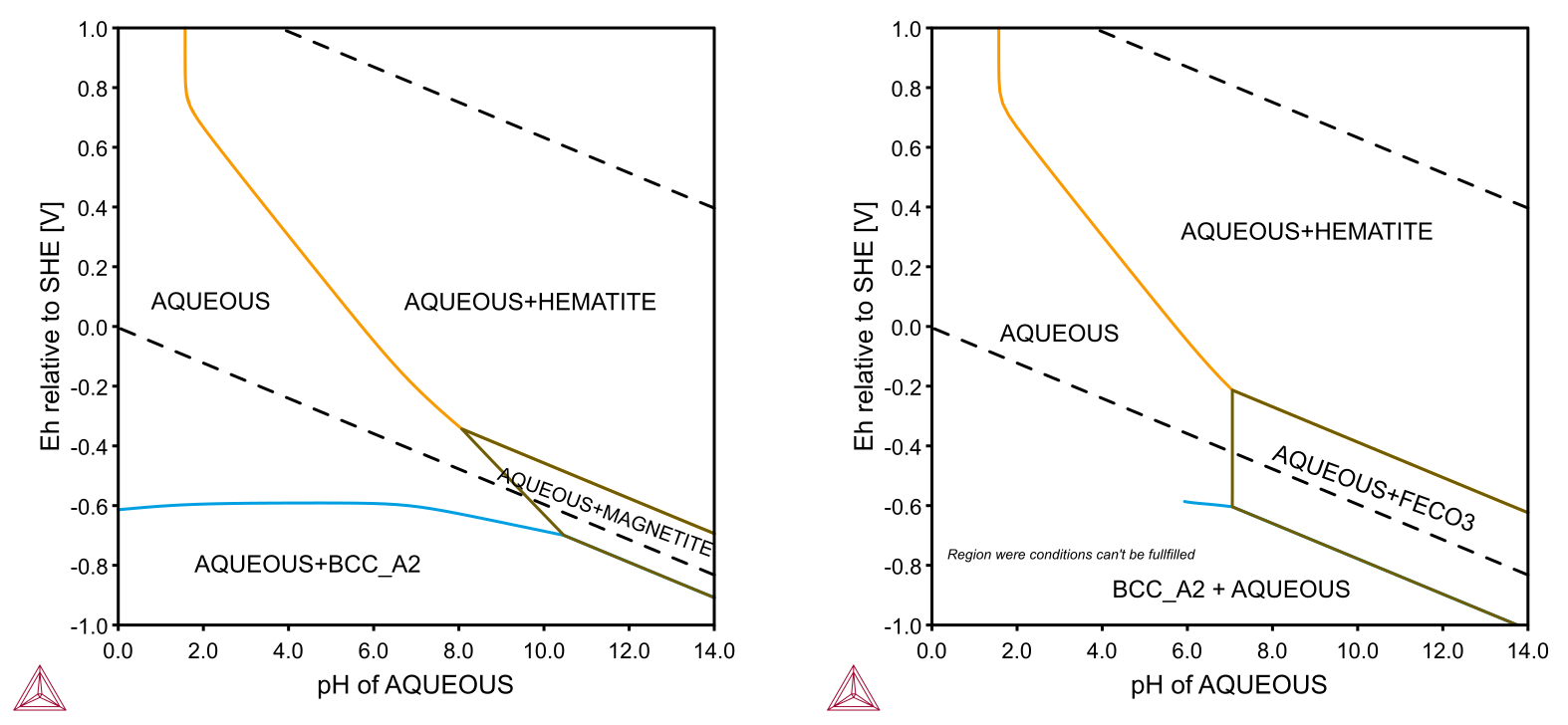
The Aqueous Calculator is included in all Thermo-Calc installations and makes it fast and easy to set up aqueous thermodynamic calculations, including Pourbaix (E–pH) diagrams, step calculations in pH, Eh, composition, and temperature, single-equilibrium evaluations, calculations under fixed partial pressure, and related simulation workflows.

Fe-Pourbaix-diagrams-at-25C-left-with-1-bar-CO2-pressure

Left: Pourbaix diagram of Fe at 25°C. Right: Pourbaix diagram of Fe at 25°C and 1 bar of CO2 pressure.

Questions the Aqueous Calculator Can Help You Answer

  • How do pH and redox potential (Eh) influence corrosion behavior and passivity ranges for different alloy compositions?
  • What aqueous species form as a function of pH–Eh conditions, solution and alloy composition, temperature, and equilibration with solid deposits?
  • Which solid phases are thermodynamically stable under varying electrochemical conditions (pH–Eh)?
  • How do temperature and pressure affect alloy corrosion and pH, including pH–temperature relationships under specific gas atmospheres?
  • How does solution pH evolve during acid/base addition and buffering processes?
  • What are the pH and osmotic pressure of complex electrolytes (e.g., seawater), and how can solution compositions be tailored for hydrometallurgical applications?

The Aqueous Calculator Allows You to Calculate
  • Full Pourbaix diagrams and single-axis diagrams as a function of redox potential, pH, temperature, or other variables, showing the stability domains of metals, oxides, hydroxides, gases, carbonates, sulfates, and other phases in aqueous solutions.
  • Molality and thermodynamic stability of aqueous species as a function of selected calculation variables.
  • Determine the solubility of gaseous species in aqueous solutions under specified conditions.
  • Evaluate aqueous solution properties, including pH, osmotic coefficient, redox potential, ionic strength, and species molality, for complex electrolyte systems.
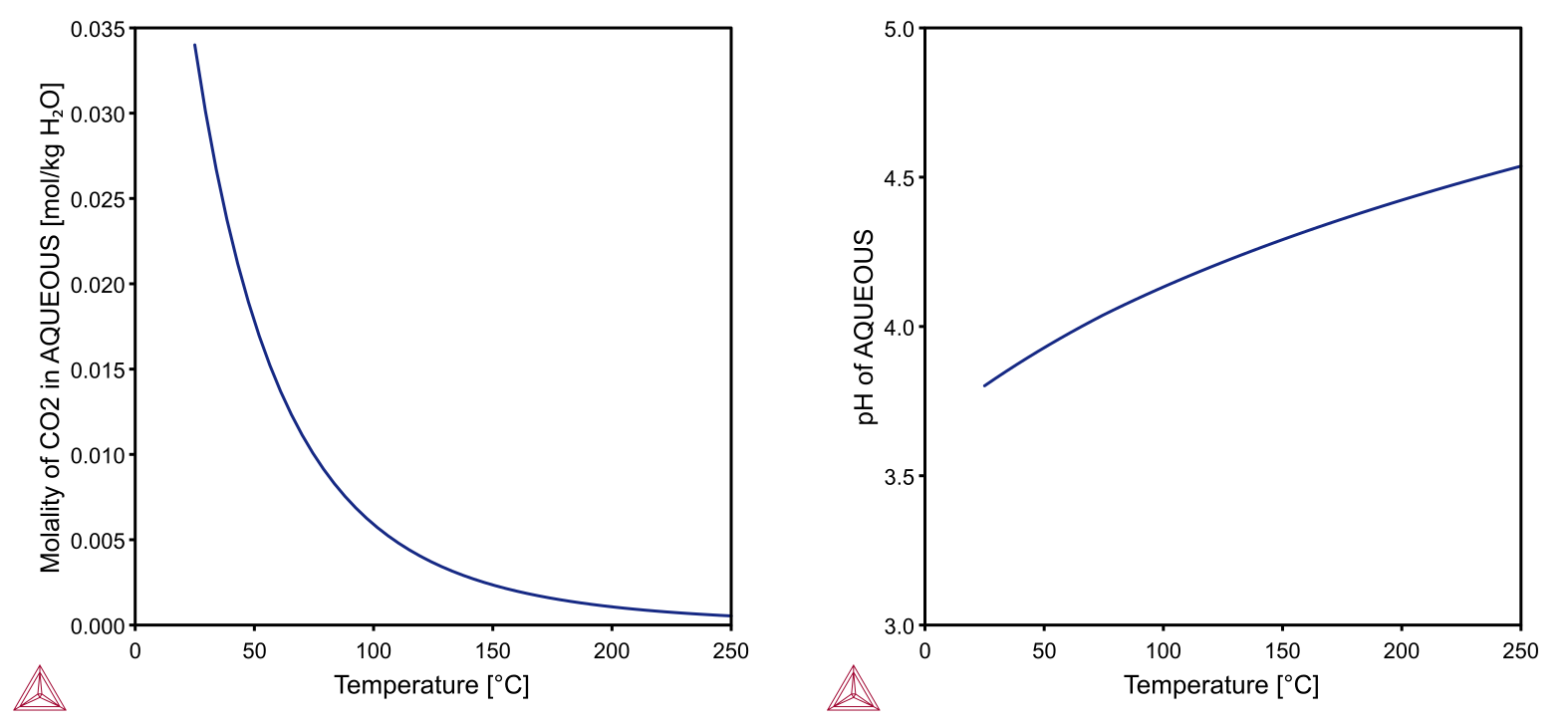
CO2-solubility-in-an-aqueous-solution-and-the-corresponding-impact-on-solution-pH

Left: the CO₂ solubility in an aqueous solution containing 100 g/L of NaCl at a CO₂ partial pressure of 1 bar. Right: the corresponding impact on solution pH.

Predefined Template for Easy Set-Up
Setting up calculations in the Aqueous Calculator is fast and efficient. The included Aqueous Calculation template comes with predefined settings and aqueous-specific quantities, eliminating the need for manual configuration. Simply select the template, adjust any optional parameters, and start your calculations with confidence. This streamlined approach saves time and ensures consistency across your simulations.
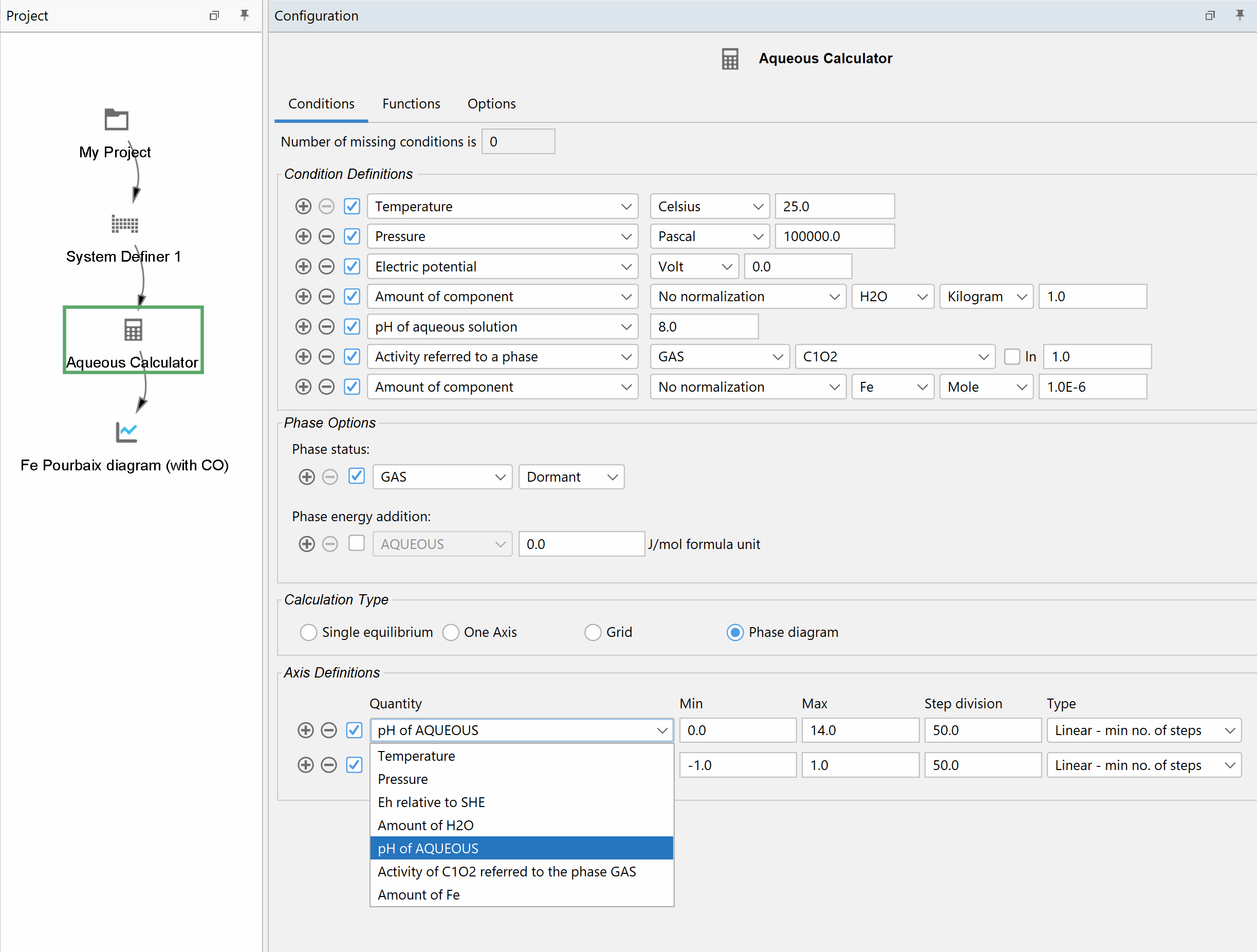
Aqueous-Calculator-configuration-window

Predefined settings in the Aqueous Calculation Template allow for fast, accurate corrosion analysis.

Databases

We recommend users use the Aqueous Solution Database (TCAQ4), which was developed to be fully optimized for the Aqueous Calculator. Benefits include, for example, that when using TCAQ4, there is no need to append gas or solid phases because the calculator handles everything automatically. The Aqueous Corrosion Calculator can also be used with TCAQ3, AQS2 or the free PAQ2 database, but it might require appending other databases containing, for example, metallic, oxide and hydroxide phases.
Learn about TCAQ4 and AQS2 Databases

Contact Us to Discuss Databases

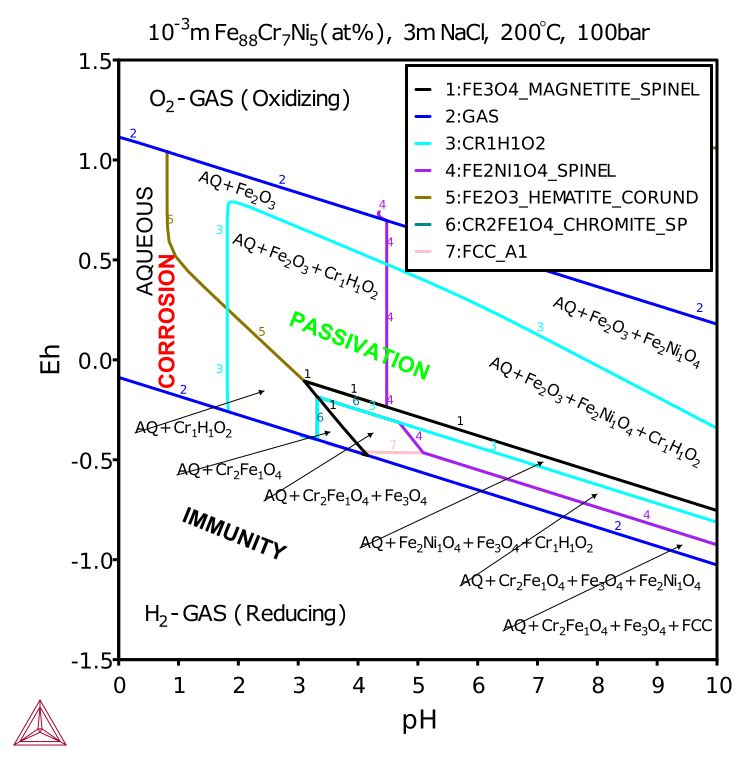
Pourbaix diagram for 0.001 mole austenitic steel with 7 at% Cr and 5 at% Ni, 3 mole NaCl, in 1 Kg H2O, at 200°C and 100 bar.

Pourbaix diagram for 0.001 mole austenitic steel with 7 at% Cr and 5 at% Ni, 3 mole NaCl, in 1 Kg H2O, at 200°C and 100 bar.

Availability

The Aqueous Calculator is included in all Thermo-Calc installations beginning with Thermo-Calc 2026a. Thermo-Calc users can try the calculator using the free PAQ2 database, while more advanced use requires a database such as the Aqueous Solution Database (TCAQ4) mentioned above.

If you do not already have a Thermo-Calc license or you are interested in expanding your license, please contact us to discuss which license is right for you.

Resources to Learn More about the Aqueous Calculator

Potential-pH diagrams considering complex oxide solution phases for understanding aqueous corrosion of multi-principal element alloys


Let Us Help You

Is Thermo-Calc Right for You?

Talk to one of our experts to learn whether our tools or services fit your needs.