
44%
lighter
component mass than the original design
Produced
crack-free
via directed energy deposition AM
No damage
detected
after multiple hot-fire tests
The Objective
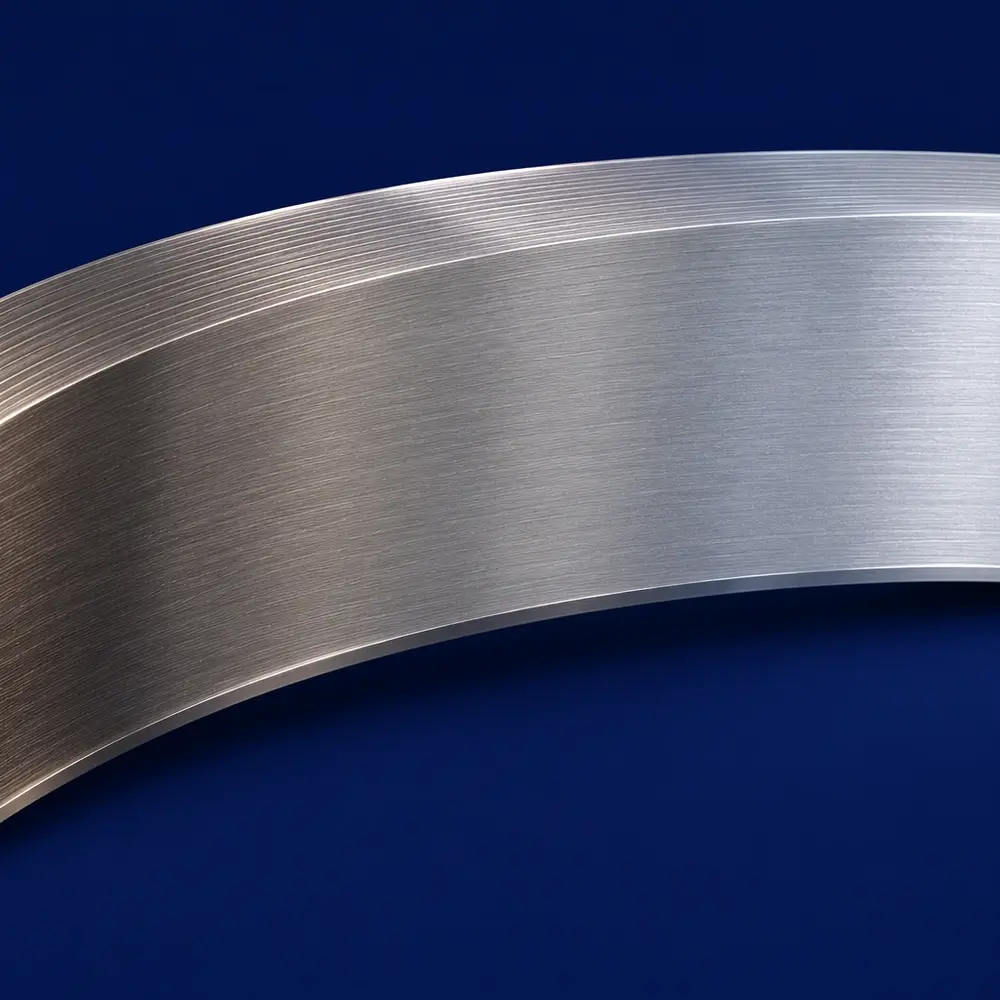
Combining Nickel and Titanium for Lighter Rocket Components
Multi-material additive manufacturing enables different alloys to be integrated within a single component, placing each material where its properties deliver the greatest performance benefit. For rocket propulsion components, this means having nickel alloys where high-temperature strength and thermal stability are essential while introducing titanium to help with lightweighting.
Through the MADE-3D project, Skyrora partnered with Thermo-Calc Solutions to develop a suitable transition between these traditionally incompatible alloy systems, enabling a single component that leverages the strengths of both materials.
The Challenge
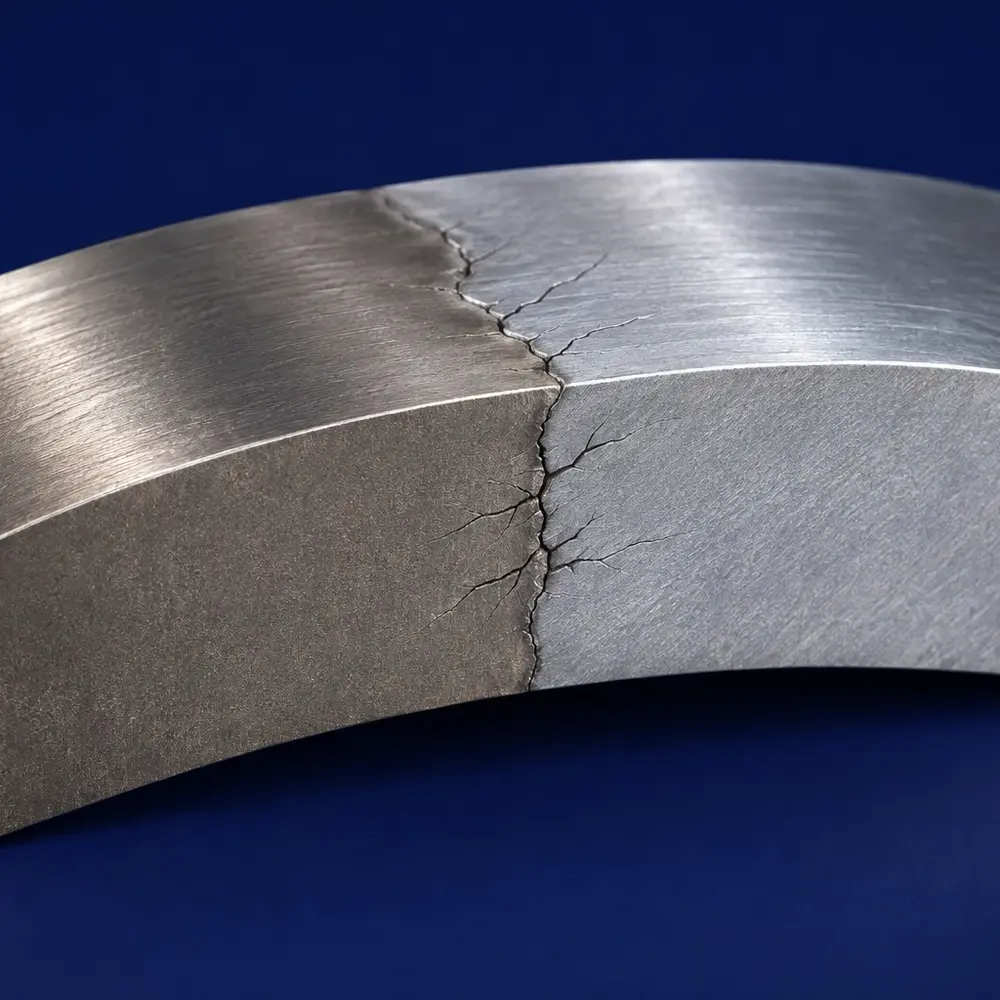
Nickel-Titanium Joining Can Cause Cracking
While the performance benefits of combining nickel and titanium alloys are clear, directly joining these two alloys presents several challenges:
- Brittle intermetallic phases:
Mixing nickel and titanium alloys produces detrimental phases that increase susceptibility to cracking. - Suitable intermediate materials:
Intermediate materials and layers must provide a compatible joining pathway between the two alloys. - Structural reliability:
The proposed joining method must be manufacturable and maintain its integrity in real-world conditions.
Overcoming these challenges requires carefully designed intermediate layers that control local composition as well as phase formation. And here, identifying suitable transition pathways through experimental trial and error alone is both time-consuming and costly.
The Approach
The Solution
Mapping a Path to Crack-Free Joining
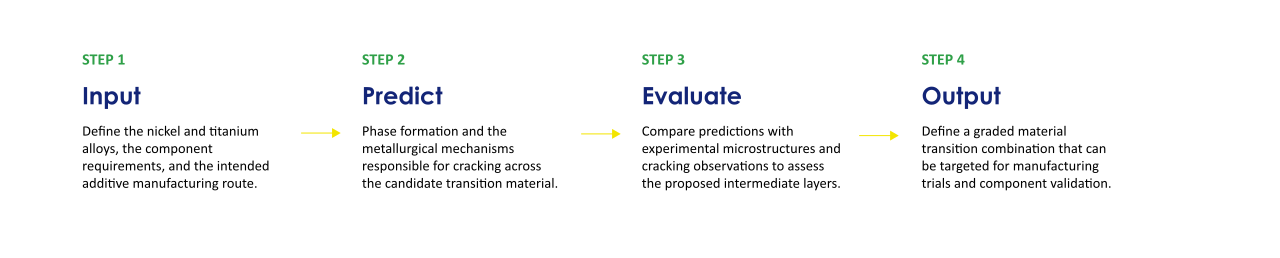
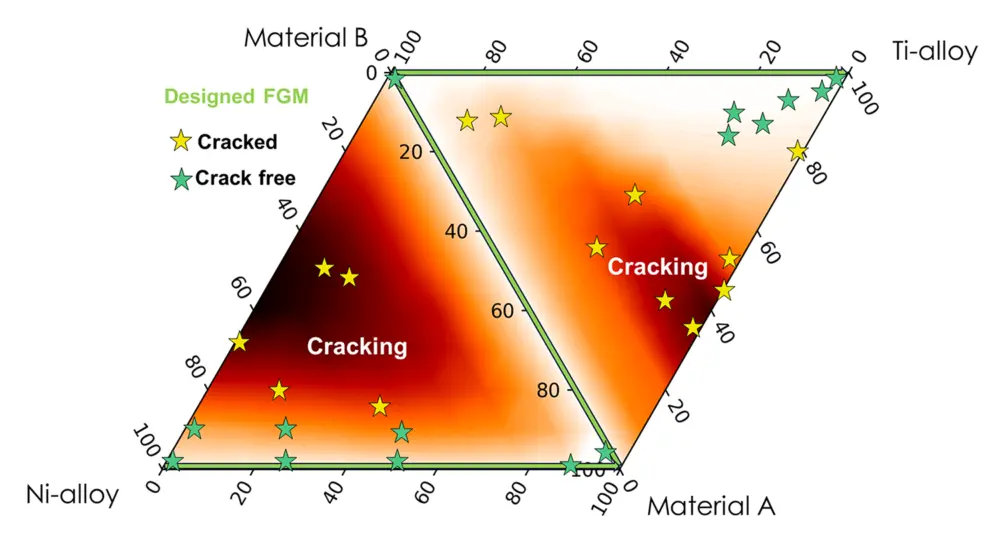
Thermodynamic simulations were used to identify a compositional pathway that avoided detrimental phase formation (see image), guiding the design of intermediate layers. Experimental observations were then used to assess the proposed transition and refine the pathway toward crack-free joining.
Skyrora Ltd. implemented this solution in a DED-manufactured rocket propulsion component, supported by manufacturing and validation work across the MADE-3D consortium (Skyrora, Exponential Technologies, f3nice, Universität Paderborn, CSEM, and the University of the Aegean).

The Benefits
Faster Development, Lower Risk, Lighter Components
Predictive materials design enabled targeted experiments, saving time and guiding the development of a lighter propulsion component successfully demonstrated through hot-fire testing.
Benefits include:
Development and Validation
Six Live Firings with No Detected Component Damage
Predictive modelling and targeted experiments supported the development of the solution in less than three and a half years, with reduced testing, cost, and technical risk compared with a conventional trial-and-error approach.
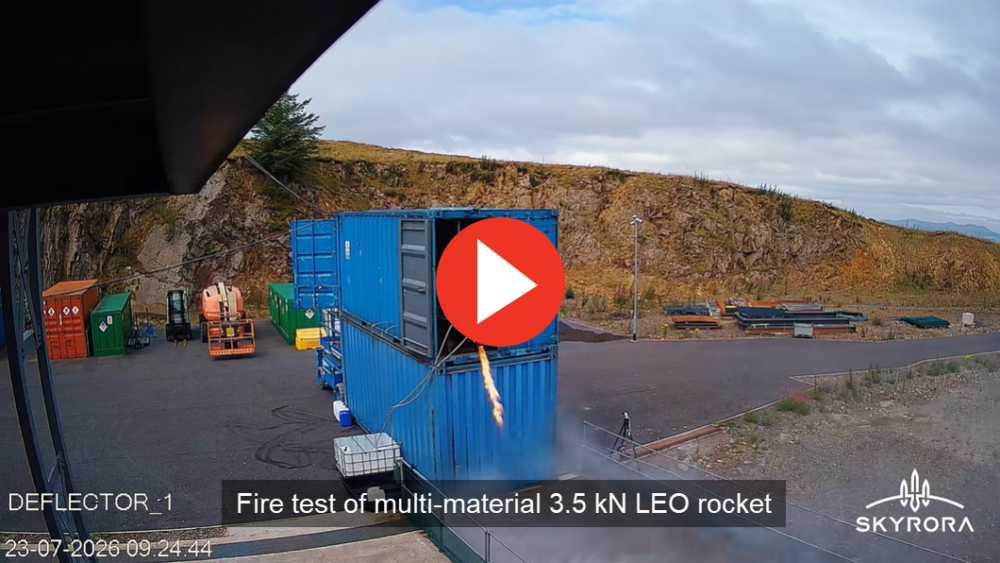
The multi-material component was subsequently demonstrated through six live firings of the developed LEO 3.5 kN engine of Skyrora. Inspections before and after the campaign found no damage to the modified component. These results connect the materials design work to a demonstrated engineering outcome: a lighter propulsion component with a graded transition that withstood hot-fire testing.

Broad Applicability
Applying ICME to Other Multi-Material AM Challenges
This approach illustrates how ICME can support the development of graded material transitions for demanding additive manufacturing applications. Thermo-Calc helps teams identify promising material combinations and focus testing, enabling faster development with lower technical risk.
Key audiences:
Download the Case Study
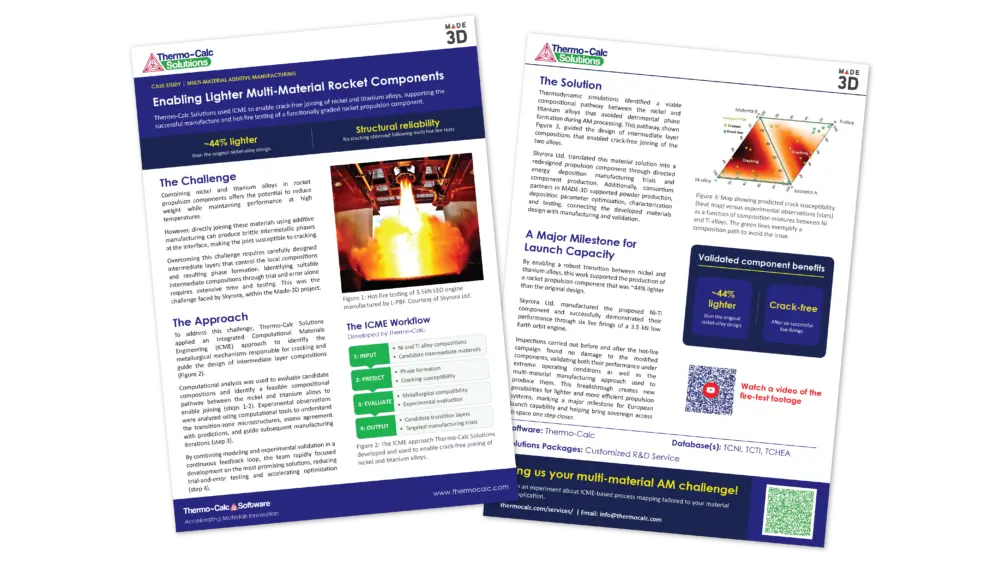
Download this case study as a PDF to save for future reference or share with your colleagues.
Start a Conversation