
Days
to predict a viable process window, which was verified experimentally within weeks
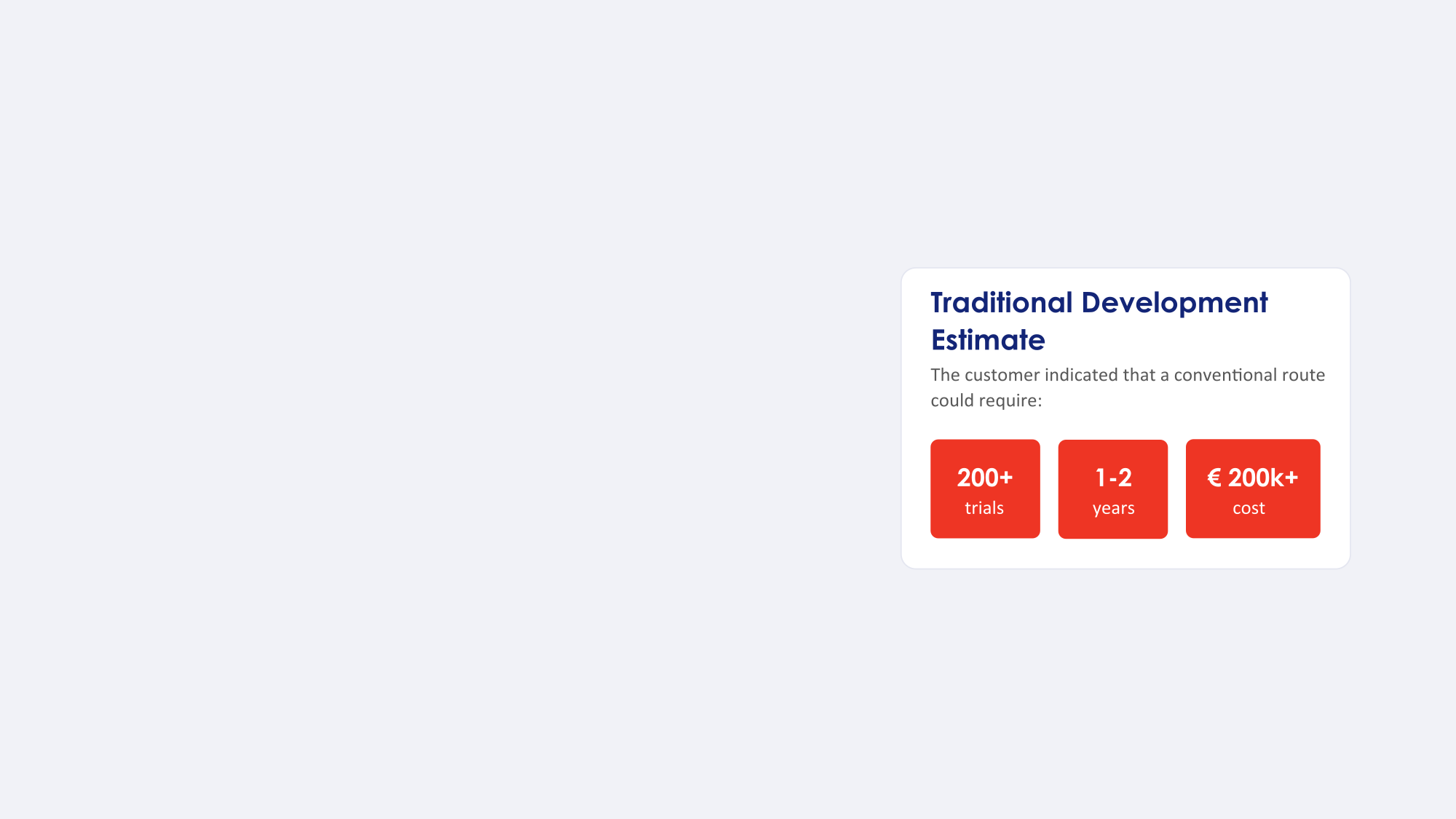
200+ trials
estimated for traditional route
1-2 years
estimated traditional timeline
200k+ EUR
estimated traditional development cost
The Objective
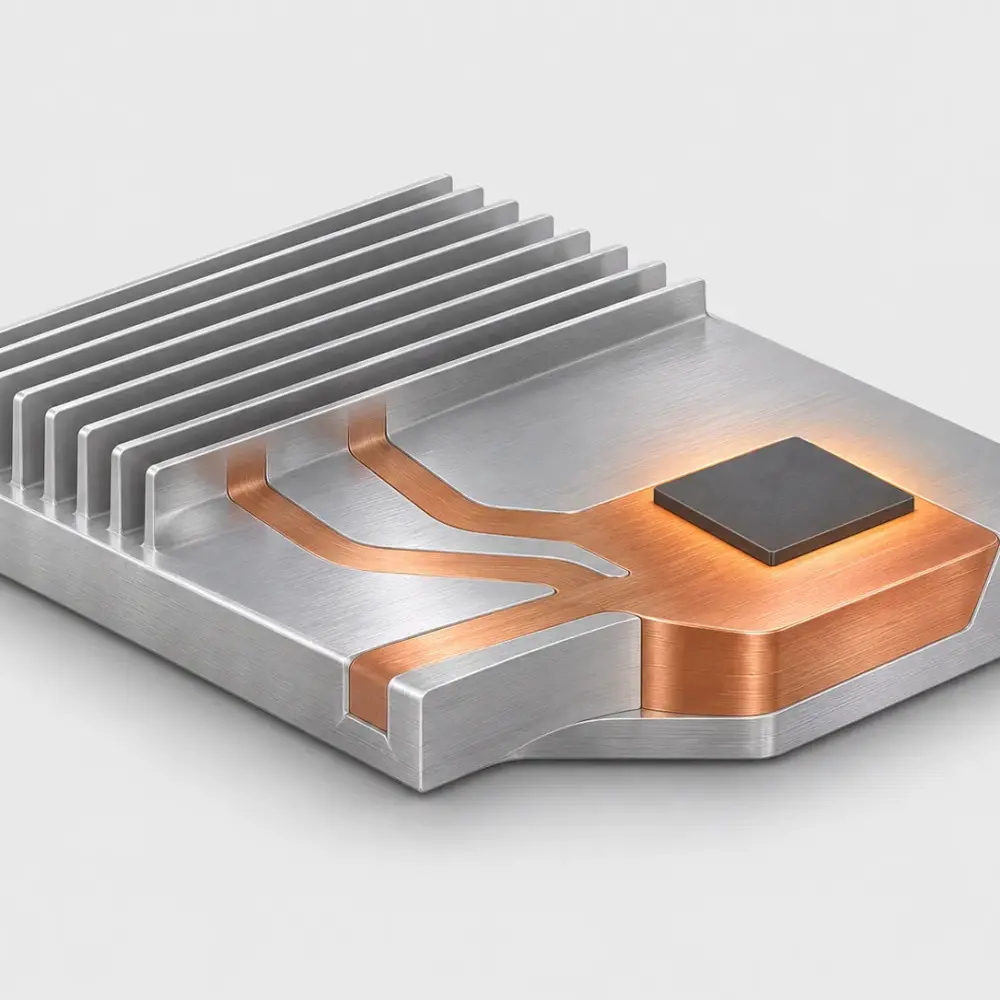
Combining Aluminum and Copper for Lightweight Thermal Management
Multi-material additive manufacturing enables lighter, more optimized components by combining different material properties within a single part.
This was a key focus of the MADE-3D project (EU Grant 101091911), which explored how multi-material additive manufacturing can be used to create components with locally tailored properties. In particular, the project investigated Al-Cu material combinations for L-PBF applications in high-power electronics and automotive systems.
The Challenge
Al-Cu Joining Has a Narrow L-PBF Processing Window
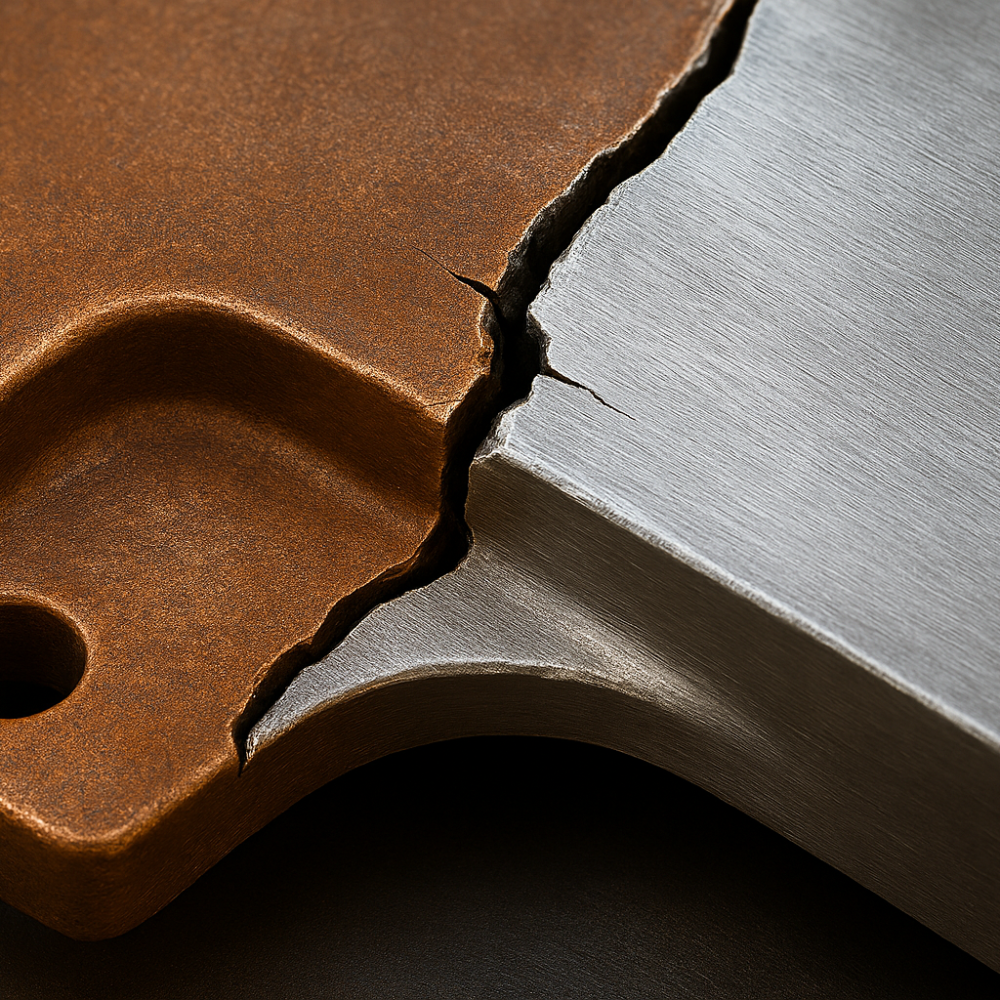
Fabrication of multi-materials by L-PBF often has a narrow and highly sensitive processing window, where unoptimized processing parameters can lead to the formation of:
- Brittle intermetallic phases:
Excessive intermixing can promote detrimental phases and induce cracking. - Thermal stress and distortion:
Process conditions can create severe thermal distortion. - Lack of fusion defects:
Insufficient energy input can limit bonding between deposited material and induce porosity.
Identifying suitable process conditions solely by experiments can be slow, costly and ultimately difficult to scale.
The Approach

The Result
A Process Map to Guide Experimental Trials
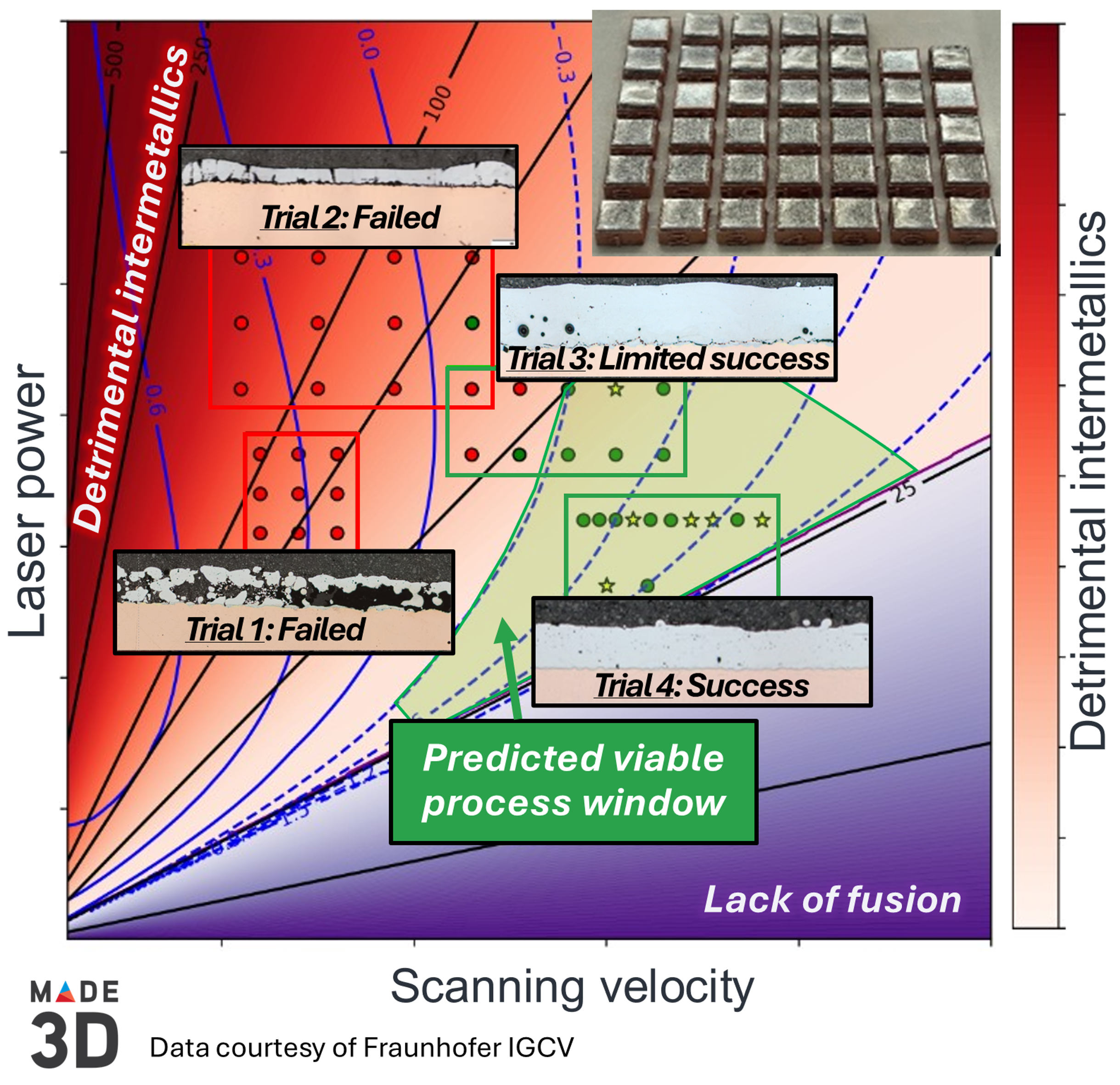
A viable Al-Cu multi-material L-PBF process window was predicted and verified within weeks. It balanced the formation of detrimental intermetallics with lack of fusion defects to identify a viable region for producing sound Al-Cu multi-materials.
With this insight, researchers were able to target processing conditions directly, avoiding the need to experimentally execute the preceding failed trials.
The image shows the predicted viable process window with experimental validation results overlaid across the defined processing regions.
The Benefits
Accelerated Development from Years to Weeks
This ICME approach substantially reduced the experimental effort, development time as well as associated costs. Beyond these development savings, the resulting component achieved weight reductions of up to 60% and a 30% increase in cooling efficiency.
Benefits include:
Broad Applicability
Applying ICME Process Mapping to Other AM Development Challenges
This developed workflow supports all types of alloy development for additive manufacturing processes. Helping deliver faster parameter development, while providing a lower-risk approach.
Key audiences:
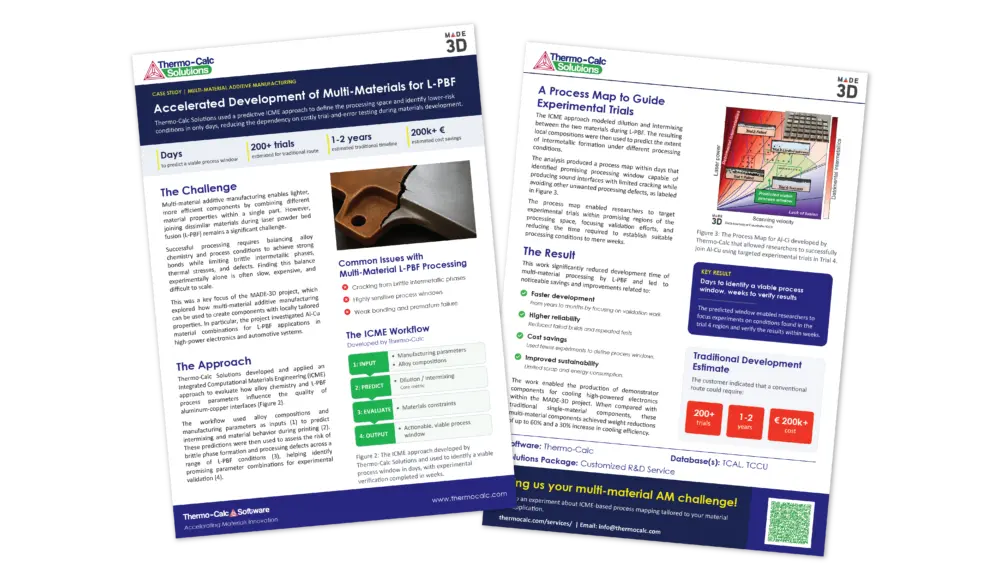
Download the Case Study
Download this case study as a PDF to save for future reference or share with your colleagues.
Start a Conversation